How’s Your Tank Level

I have been talking with many couples over the past several weeks. Many of the stories I hear are similar. Their tanks are empty and their feelings have changed. They are hurting, frustrated and tired. When your “love” tank is empty, the small things bother you and hurt you even more. If you are in a relationship, what are you doing to fill the other person’s tank? Have you been siphoning off or filling up their tank?

Maybe your tank is empty and you have no interest in filling the other person’s tank. On your own that will be hard, but ask God to help you take the first step in pouring something into their tank. Odds are they are running on empty as well. If you take the initiative the other person is much more likely to start filling your tank.

Now you need to know what fills their tank. Water will not run a car, it takes gasoline. You need to find out what their gasoline is and then pump it every day. Don’t wait on the other person start today – even a drop is better than nothing.

Why Wait?

What are you going to do this week to change and grow? Where do you need to change and grow? In what area of your life are you struggling? How are you dealing with the hard things in your life? Who do you need to spend more time with? Less time with? What do you need to say no too? When will you start making some changes? Do you even need to make any changes?

This week you will continue on the journey, the adventure called your life. It can be filled with the same old stuff, or it could be filled with something unexpected. We don’t know what the upcoming week will hold. Or the next year for that matter. We cannot control what happens around us, and sometimes even what happens too us. However we can control how we respond, how we prepare, what we say and what we do.

It amazes me how many people wait until tragedy strikes or hardship hits before they begin to make changes. Unless the pain of remaining the same is greater than the pain of change we tend to not change. We wait until we have a health problem before we change the way we care for our bodies. We wait until a relationship is damaged before we make relational changes and start working on it. We wait until a financial crisis hits before we change our spending. We stuff our emotions until we explode. We avoid conflict until it gets so big it blows up in our face.

Start making the changes you need to make before the pain intensifies. It is never too late to make changes in your life. Ask God to help you discover the areas you need to work on. Go get help, seek counsel, read a book, listen to a CD, go to a seminar, spend more time with God, read your Bible, go on a fast, go on a spiritual retreat, work on a life plan, set some goals, change your calendar, add some things to your calendar, delete some things from your calendar, say no, say I don’t know, admit you need help. Do something this week, don’t wait. Start small and keep building on it. A year from now you can look back and see the progress you have made. You can do it.

Legacy

Today I officiated at a funeral service for Jack Beans. It was a pleasure to meet his family and hear stories about this man. I could tell his family loved him deeply and that he had influenced them in a profound way. The legacy that he was leaving behind will go on for generations.

He was married for nearly 58 years to Esther whom he adored. He loved to be with her and spend time with her. They did everything together. What a great example to the rest of us on how to love your wife. He also was a very humble and self-less man. He loved to help and serve other people. He used his gifts and abilities to fix things and build things to bless his family and friends. He was always thinking about other people and how he could serve them to make their life a bit easier. He served his family, friends, country and community.

The family shared with me that he did not go to church much over the years. However, recently they started attending NewPointe with his daughter and grandchildren and he loved it. Before he got sick he came as often as he could. He loved the music, the messages and the environment. He felt welcomed and was growing in his faith. He also loved to see his grandchildren and great grandchildren loving church.

He recently shared with someone close to the family that he had faith in Jesus Christ as the forgiver of his sins and the leader of his life. Wow, that gets me excited, to know that he came to that understanding late in life. He was a forgiven man.

That is the best gift he could give to his family; the assurance of where he is going to spend eternity. The Bible says that God has placed eternity in the hearts of men, and that means that we will spend forever somewhere, either in the presence of God, or separated from Him. How great to know that Jack is with God right now and that we can see him again someday.

PDA

Here are some insights from Mark Sanborn on leadership. Mark was a speaker at the Maximum Impact Simulcast last Friday. He has a new book out called “Encore Effect”.

What if you were so good at your work, such an asset to your company (or family), such a remarkable leader that your boss (or spouse) or board of directors would do almost anything not to lose you to a competitor.

PDA stands for Performance Development Agenda. He challenged us to think two levels up instead of just one. Try to think about being a more remarkable performer, thinking two levels up. Be a more remarkable person, understanding who we are is critical. Help others become more remarkable, help others surpass themselves.

Mark said that both passion and process are needed for success. Passion is not enough, you need a process. This is the process he described:

  • Prepare – This is where remarkable performances always begin. You prepare for what you love. How are you preparing for your performance at work and life?
  • Practice – It won’t make you perfect, but it will always make you better. Learn to summarize critical activities and learn essential skills. Ten thousand hours of practice leads to greatness. Some critical activities of leadership include persuading, vision-casting, coaching, communicating and executing. Are you practicing your critical activities and skills?
  • Perform – This is where preparation and practice payoff. Great performers move people to act, think, feel good and laugh.
  • Pitfalls – Avoid them when you can and be prepared to handle them when you can’t. Most pitfalls can be avoided. Remarkable is not perfection, it is being authentic and real in the midst of pitfalls.
  • Polish – Good is never good enough, keep polishing and improving every aspect of what you do, so that your next performance is even more remarkable than your last.

School is never out for the encore performer. Passion is the fuel for remarkable performances.

Simulcast

I have been sitting in the Maximum Impact Simulcast at NewPointe today. I just finished listening to Liz Murray talk about her story of going from being homeless to attending Harvard. What an amazing story of growth. Her parents were both drug addicts and they lived in welfare her entire childhood. She described going days without food, eating ice because it felt like eating food. Splitting a tube of toothpaste with her sister and on.

She talked about making empowering decisions or dis-empowering decisions. Those moments in time when we can go either way. She said that self-pity will always lead us to dis-empowering decisions. After losing her mother to AIDS, she started to realize that she had to change something. She started to make empowering choices, like going to school, working hard, getting up ever morning. She ended up applying for a scholarship and getting it, which allowed her to get into Harvard.

Hearing her story was worth the entire day. You can check out her website to learn more. You can also learn more at this site as well.

Also heard from Linda Kaplan Thaler, John Maxwell, Kevin Carroll, Tony Blair, Al Weiss (Disney CEO), Mark Sanborn, Jack Nicklaus and Bill George. More on some of them later.

Character Matters

“What you do is not as important as how you do it.” That is a quote from Tony Dungy. Character is developed in the little everyday things we do. Those small decisions to do things the right way even if no one finds out. It is in those decisions to work hard, to stay focused, to forgive, to do your homework, to finish the book, to spend time with your family that our character is slowly being formed. When challenging times come, and they will, our character is tested and revealed.

Knowing what is right and choosing to do it is what character development is all about. Our character reflects our inner heart. If we are a mess on the inside, that comes out in the storms of life. Many times it’s the hard things that are the right things. Doing the hard thing of forgiving someone that hurt you or having that difficult conversation, or confronting bad behavior, or maybe admitting you hurt someone else or admitting you have an addiction or a habitual sin issue. Those are hard things that when done make us stronger. That brings peace into our lives. When we do the easy thing or the convenient thing is usually brings turmoil into our lives.

Many times we must choose between what is convenient and what is right. There are consequences for each choice we make. If you think about those consequences, you can make better decisions. Character really does matter! What are you doing when no one is looking? What hard thing do you need to do?

Sunday Rewind


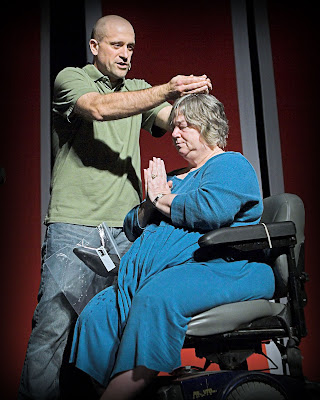
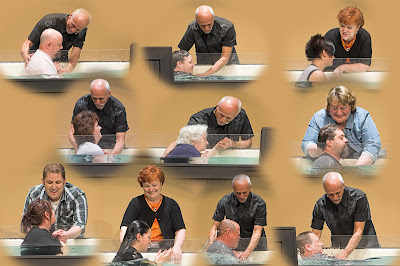
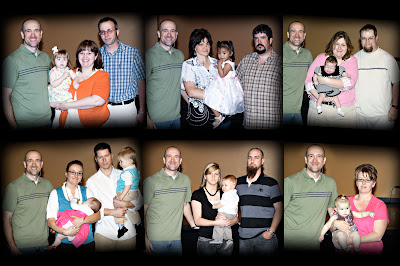
What a great day at NewPointe. Three services, eleven baptism’s, six families dedicating their children to Christ. The entire reason we do what we do is to lead people into a growing relationship with Jesus Christ. Today you got a chance to see people growing in that relationship. If you missed the stories checkout our website for baptism videos, coming soon.

Every month we are hearing stories about how God is moving and working in peoples lives. My prayer is that we stay focused on giving God the glory and making Jesus known in all the communities around us. We are getting some incredible opportunities to share the Good News and reach more and more people with the truth from God’s word.

One lady that was visiting today because of the baptism’s mentioned that someone was talking about NewPointe at a Curves location in Cambridge. We have a group of 70-80 people meeting every other Sunday night in Louisville. There are new small groups forming in Sugarcreek, Dover, Louisville and Strasburg. NewPointe Community Church has “it” right now. We need to make sure we don’t lose “it” by getting distracted and thinking we are better than we really are. As leader’s at NewPointe we need to stay Humble and Persistent; Focusing and Determined; Bold and Compassionate.

I love the idea that people are talking and excited about their church. That is good and I want to encourage everyone that calls NewPointe their home to invest in the people you know and invite them to church. We promise to do everything we can to make it an incredible experience and connect with them in a practical real way.

Introducing people to Jesus and then helping them grow in that relationship is what we are all about. NewPointe is outward focused and on mission to change the world.

Mixed Messages

Why do we send mixed messages? I mean in our relationships, at work, in our marriages, with our children and yes even at church. Saying one thing and then doing another. Talking one way and then living or behaving another. Asking to have it one way and then you doing it the opposite. How about saying you love someone and then showing you don’t.

This is an area that has really been jumping out at me lately. People not walking the talk. I really think this is a problem in many relationships today. In our minds we know what is right and good, but somehow it doesn’t reach our heart. It is the heart that dictates our behaviors and our actions.

You see this in the church as well. We say we love all people and want everyone to come to know Jesus Christ. Then our behaviors, our words and our actions don’t line up with that. We speak a language of insiders, we expect everyone to look, dress, talk and act like we do. We put on a friendly outward appearance and then go out and do whatever we want to do. Every church struggles with this problem. The reason I know this, is because the church is made up of people. Imperfect people that send mixed messages. Outsiders see these messages and ask why they should become a part of all that. They don’t get a real good look at Jesus.

I don’t think Jesus ever sent any mixed messages. He spoke the truth and loved people. He attacked the religious people and reached out to the outsiders. He was authentic and real to everyone all the time. He did not pretend everything was great when it wasn’t. He faced temptations and overcame them every time, because of his heart. His heart was pure and full of truth.

A friend of mine told this story about a guy he has gotten to know. His friend was at a restaurant meeting with another friend. This friend was trying to share Jesus with him. He was trying to convince him that he needed Jesus in his life. When the waitress came up this guy ripped her because the last time he was in they got his eggs wrong. When he was done ripping her he turned to his friend and continued to talk about him needing Jesus. That is a mixed message and that small action turned off whatever light had begun to shine.

How about in your marriage or special relationships? Do you disrespect your husband and then expect him to show love to you? Do you demand respect from your wife and then do or say unloving things to her? Do you discipline your children for certain behaviors and then do them yourself? Do you ever catch yourself saying or thinking, “Do as I say, not as I do”?

Do your actions and behaviors line up with your words? Do you ever try to manipulate to get your own way? These are heart questions, is everything OK in your heart? Ask God to help change your heart and stop sending mixed messages.

This Week

This week I want to move from reactive to proactive, from unfocused to focused, from unclear to clarity, from being driven by circumstances to being directed by purpose.

To do that I must carve out time to work “on” things and also schedule time time to work “in” things. What I mean by that is this: “On” time is when you step back and take a look at the big picture. It’s like getting into a helicopter and taking a look from above. It’s when you spend time thinking, observing, planning, prioritizing, reading and studying. This is a time for self-development and identifying where your blind spots are. It’s a time of putting your strategy together for the coming days, weeks and months. It’s sharpening your ax.

“In” time is also important. That’s when you do administrative things. The day-to-day stuff that needs to get done. The reports that need completed, the emails, voice mails, notes, memos and meetings. It’s doing the laundry, washing the dishes and sweeping the carpet. “In” time is a vital part of every leader’s day. If you don’t pay attention to the details some of the time you lose track of things and balls get dropped.

So this week I am going to work on a better balance of “on” time and “in” time. The only way to do that is to think ahead and plan out your week. By planning out your week, you bring clarity, purpose and focus to the things you are doing.

Lead ON

How to be a Good Listener

Relationships can be hard work. Especially the marriage relationship. I am reminded of that over and over in my own marriage and other important relationships. A big part of deepening your relationships is to listen and communicate well. I came across this short article by Dr. Gary Chapman that did a nice job of explaining how to be a good listener. Take the time to read this and then start applying it to your relationships.

How to Be a Good Listener by Dr. Gary Chapman

You’re probably familiar with the five love languages–quality time, words of affirmation, acts of service, gifts and physical touch. Did you know quality time has many dialects? One of the most common dialects is that of quality conversation. By quality conversation, I mean sympathetic dialogue where two individuals are sharing their experiences, thoughts, feelings, and desires in a friendly, uninterrupted context.

Have you ever wondered if you’re a good listener? How can you improve in this area? Here are eight steps to becoming a sympathetic listener.

1. Maintain eye contact when you are listening to someone. This keeps your mind from wandering and communicates that the person has your full attention. Refrain from rolling your eyes in disgust, closing your eyes when they give you a low blow, looking over their head, or staring at their shoes while they are talking.

2. Don’t engage in other activities while you are listening to another individual. Remember, quality time is giving someone your undivided attention.

3. Listen for feelings. Ask yourself: “What are this person’s emotions right now?” When you think you have the answer, confirm it. For example, “It sounds like you are feeling disappointed because I forgot…” That gives the person a chance to clarify his/her feelings. It also communicates that you are listening intently to what they are saying.

4. Observe body language. Clenched fists, trembling hands, tears, furrowed brows, and eye movement may give you clues as to what the person is feeling. Sometimes body language speaks one message while words speak another. Ask for clarification to make sure you know what the person is really thinking and feeling.

5. Refuse to interrupt.

6. Ask reflective questions.

7. Express understanding. The person needs to know that he/she has been heard and understood.

8. Ask if there is anything you might do that would be helpful. Notice, you are asking, not telling the person what she ought to do. Never give advice until you are sure the other person wants it.