
Scars

It was 1979 and I was 10 years old. I remember telling my mom that I hit double digits! A few days later I was coming home from playing ball at Walnut Creek Ohio. We lived at the bottom of a hill and I was on my bike. It was a sunny beautiful summer day. I was picking up speed and feeling amazing, like a race car driver. As I approached the bottom of the hill I planned to slow down and make the turn. What happened next was a blur, as I hit some loose gravel and turned, I went into an extended slide.

I remember slowly getting up, my pants were ripped at the knee and my leg was throbbing. I somehow got my bike upright and started hobbling toward our house. I remember doing a Jimmy Carter impersonation as I walked, He was President at the time. Using his southern accent, I distracted myself from the pain and thinking about anything but getting home.

I made it inside the house and slowly peeled off my jeans. I nearly passed out when I saw my knee. It was a combination of blood, open flesh, dirt and gravel. Today we call that road rash. I cover myself up and laid on the couch and waited for mom to get home. She was working and my two brothers were not home. I laid there talking like Jimmy Carter and thinking about things like baseball, fishing and my bike.

When mom got home she knew right away something was wrong. After listening to my version of what happened and examining my knee she called my Grandma. I could hear her on the phone asking what she thinks we should do. “Should I take him to the emergency room” mom asked?
Grandma was small but very tough, she grew up on a farm and had raised 5 kids on a farm. Grandma did not hesitate in her reply. “Oh it’s just a knee he will be fine”. So my mom hung up the phone and put a patch on my my knee and said it would be fine.

A few days later it was not fine. An infection had started and my mom knew I needed to see a doctor. She took me in and the doctor cleaned up the wound as best he could. He said it was too late for stitches so he patched me up and told us to change the bandages every day. He told us my knee would be OK but I will have a good sized scar the rest of my life. I remember seeing all kinds on dirt and gunk every time we changed the bandage. The salve we put on the wound drew out the dirt and infection over time and it eventually healed.

I still have that scar, and every time I see it I go back to that day on my bike and the scene I just described. We all have scars, some physical like mine but some emotional from hurts and trauma’s we had in our past. Every time we see that scar it take us back to that moment when we got hurt, abused, rejected or assaulted.

The physical scar on my knee has made my knee numb in that area, I remember years later I could take a pin and push it into the scar and not feel it. It’s the same for emotional scars. It numbs us to the pain, but there is still damage that was done. If you have some emotional scars, they won’t go away unless you work through it. There can be an infection under that scar. This often requires the help of skilled people to help you navigate the right way to do that.

I also believe we must involve God in this as well. Everything has a spiritual element to it, including our pain and hurts. Our attitude can’t be it’s just a knee or it’s just my emotions. God is involved in every part of our lives, especially the inner parts. That’s where He does his best work.

When we experience a trauma in our life the sooner we talk about it, admit our hurt and feelings and work through things like forgiveness, the sooner real healing can happen and the scar becomes smaller or can even completely heal and disappear.

If I would have gotten stitches right away, I would not have this scar today. But if we wouldn’t have taken care of the infection I could have lost my leg. Even years after a physical or emotional trauma you can experience emotional healing. Don’t wait, go get help, turn to God, forgive those that hurt you.

A great place to start is by talking to God about it. Sharing all the emotions with him and asking for help, healing and comfort. Then take the step to talk to a person, a counselor, a trusted mentor, or a pastor. It might be hard, but it will make you a better, stronger person. God loves you and cares about every part of your life, even the scars.
Worry vs. Prayer

Big Point:  Worry is focused negative thinking, while prayer is focused spiritual thinking.

About 19 million Americans suffer from anxiety disorders, but far more suffer from mild anxiety or worry that has not yet developed into a disorder.  For many people today, worry has simply become a mental habit. Automatically thinking the worse case scenario for the events that happen in their lives.  It’s also playing the “what if” possibilities over & over in their minds.

This has become the normal for many people, however there is a better way and a better normal.  This way leads to less stress, more peace and better health. Philippians 4:6-7 gives us the better way “Don’t worry about anything; instead, pray about everything. Tell God what you need, and thank him for all he has done. Then you will experience God’s peace, which exceeds anything we can understand.  His peace will guard your hearts and minds as you live in Christ Jesus.”

So, prayer is the better way.  Pray should be our normal response to anything that comes our way.  Pausing to talk to God, ask for his help, for wisdom, for courage, for patience.  Expressing our frustrations, fears and doubts to him instead of having a negative conversation with ourselves leads to peace.  It also leads to better health both physically and emotionally.

Read and Reflect:  Read these passages of Scripture several times.  Each time you read it emphasize a different word.  Then reflect and think about what you noticed.

  • Give all your worries and cares to God, for he cares about you.” 1 Peter 5:7
  • “So humble yourselves before God. Resist the devil, and he will flee from you.” James 4:7
  • “But you belong to God, my dear children. You have already won a victory over those people, because the spirit who lives in you is greater than the spirit who lives in the world.” 1 John 4:4
  • “And so I tell you, keep on asking, and you will receive what you ask for. Keep on seeking, and you will find.  Keep on knocking, and the door will be opened to you.” Luke 11:9
  • “But those who trust in the Lord will find new strength. They will soar high on wings like eagles.  They will run and not grow weary. They will walk and not faint.” Isaiah 40:31

Questions to Consider:

  • What do you tend to worry about the most?
  • What benefits would you gain by praying more instead of worrying?
  • What is one thing you could do to remind yourself to pray more throughout your day?
  • When was the last time you memorized a passage of Scripture?  If it’s been awhile consider memorizing one of the verses in this devotional.

What’s Next?

  • Memorize one or more passages of Scripture this week.
  • Focus on Jesus by reading the story found in Luke 10:38-42
  • Make a list of all the things that you are grateful for
  • Build prayer into your daily schedule, with reminders until it becomes normal.

Pray:
Dear Lord,
I need you now because I am full of stress and anxiety. Reading your Word brings comfort, as I ask you to come and take my heavy burdens. I take each burden, one by one, and lay them at your feet. Please carry them for me so that I don’t have to. Replace them with your humble and gentle spirit so that I will find rest for my soul today. I receive your gift of peace of mind and heart. Thank you that I can lie down tonight in peace and sleep. I know that you, Lord, will keep me safe. I am not afraid because you are always with me. Please keep me daily, Lord, in your perfect peace.
Amen.

Why Are We So Afraid?

It seems these days that many people are living in fear. Fear and anxiety are a common every day occurrence for people. We fear the economy getting bad, we fear losing our jobs, we fear something happening to our children, we fear getting sick or being infected with the Corona Virus. We fear people we don’t know, we fear the other political party, we fear being rejected, failing, being misunderstood. I could keep going.

Why are you so afraid? Jesus spoke those words to his followers after he calmed a storm. It’s a question he is still asking all of us. Why are you so afraid? Do you still have no faith?

Here is what was happening at that time. Jesus had been building his ministry and was attracting many people. He had just spent most of the previous days teaching the people gathered about the Kingdom of God.

So after a day of teaching and then explaining the teaching in simple terms to his disciples, he said to his disciples “Let’s go over the other side.” So off they go to cross the Sea of Galilee. This sea is known for having violent and unexpected storms. When the storm hit, these seasoned fishermen panicked, thinking the storm was going to sink the boats and they would drown. As this storm began, Jesus was sleeping. He was tired from a long day of teaching. They finally woke him up and said; don’t you care if we drown and die!

Does any of this sound familiar? Our lives are full of unexpected violent storms. Things happen that are completely out of our control. It often feels like Jesus is sleeping and does not care that we are in this storm. We feel like we need to cry out and wake him up. We want him to keep us safe and take the storm away.

The disciples knew who Jesus was, they believed what he was teaching them, yet they underestimated his power. They did not fully trust that he would not let them die. We are the same way, we believe in God and may even have read and studied what he has to teach us; yet we don’t always fully trust him with the storms that come up in our lives.

What did Jesus do? Jesus stood up and commanded the wind and said to the waves, “Quiet! Be Still!” Then the wind stopped, and it became completely calm. That’s Jesus! He’s in control, He is all powerful, He loves us.

Think about the storms in your life, the situations that cause you great anxiety. Whatever your difficulty or challenge, you have two options:

  • You can worry and stress and assume that Jesus no longer cares like the disciples did.
  • Or, you can resist that fear, and trust that God is in control and He will guide you through the storm or calm the storm.

We too often try to take control of the ship and fix things on our own. When we do that and exclude God, he patiently waits for us to come to him and trust him, to put our faith in him.

Here are two lessons we learn in life’s storms:

  • You and I must trust what God has told us. He has promised to never leave us or forsake us.
  • You and I must remind ourselves who’s in the boat with us. When God permits us to go through a life storm, it’s usually to show us that there is no problem he can’t solve. There is no storm that is too big for him.

Traveling through these storms with Jesus in our boat strengthens our faith, develops our character and deepens our relationship with him. That only happens when we completely trust him no matter what comes our way. Even when we don’t understand why something is happening, God wants us to trust him and not be afraid. When we try to lean on our own understanding we will fall down and miss what God has for us.

Proverbs 3:5-6 say “Trust in the Lord with all your heart and lean not on your own understanding; in all your ways acknowledge him, and he will make your paths straight.”

Leaning means putting our full weight on him, resting on him without fear of falling. God knows what is best for us, because he has a much bigger perspective than we do.

If you are in the middle of a life storm, know that Jesus is in the boat with you, or you can invite him into your boat. Once there, he will never leave you, he will stick with you through the most violent storms imaginable. Lean on him when you don’t know what your next move should be. Trust God completely, he might not make the storm go away, but he will not let you drown.

Generosity is …

Generosity is a quality that most people want to be around. It can be inspiring and heart warming to see genuine generosity. However, generosity is a heart issue, it’s what is happening in our heart that causes us to be generous.

Paul wrote most of the New Testament and he talks a good bit about generosity. in 2 Corinthians 8 and 9 he unpacks some amazing truths about what generosity is. Take a moment and reflect on these 11 truths and then ask yourself how generous you are? Where do you need to grow?

  1. Generosity is unrelated to income and wealth – You can be generous no matter what your economic status.

Out of the most severe trial, their overflowing joy and their extreme poverty welled up in rich generosity. 8:2

2. Generosity is never forced – it’s a choice we make everyday.

For I testify that they gave as much as they were able, and even beyond their ability. Entirely on their own. 8:3 

3. Generosity cannot be contained! – When we are transformed to see as God sees, and care as God cares, we understand the honor we have in giving. Giving is contagious.

And they urgently pleaded with us for the privilege of sharing in this service to the Lord’s people. 8:4 

4. Generosity is always focused first toward the Lord – When we give ourselves to the Lord, our hearts turn from selfish to generous.

And they did not do as we expected, but they gave themselves first to the Lord and then to us in keeping with God’s will. 8:5 

5. Generosity is tangible evidence of our love for God – It is outward evidence of the inner change happening in us.

I am not commanding you, but I want to test the sincerity of your love by comparing it with the earnestness of others. 8:8 

6. Generous people meet needs – God helps us to notice the needs around us and gives us the discernment to know how to best help those in need.

At the present time your plenty will supply what they need, so that in turn their plenty will supply what you need . . . “[He] who gathered much did not have too much, and the one who gathered little did not have too little.” 8:14-15

7. Generosity honors the Lord – It is an act of worship and brings glory to God.

What is more, he was chosen by the churches to accompany us as we carry the offering, which we administer in order to honor the Lord himself and to show our eagerness to help. 8:19 

8. Real generosity is expressed cheerfully – It’s a joy to give. When we give we are a blessing to others and when we give we are blessed ourselves.

Each man should give what he has decided in his heart to give, not reluctantly or under compulsion, for God loves a cheerful giver. 9:7

9. Generosity is personal between us and God – It’s a personal choice to give, we should always pray about our giving and make plans to give.

Each man should give what he has decided in his heart to give, not reluctantly or under compulsion, for God loves a cheerful giver. 9:7 

10. God provides the gift for the generous to give – God owns it all and supplies it all.

Now he who supplies seed to the sower and bread for food will also supply and increase your store of seed and will enlarge the harvest of your righteousness. 11 You will be enriched in every way so that you can be generous . . . 9:10–11 

11. Expressed generosity moves others closer to God – Our giving impacts people in ways only God really sees.

So that you can be generous…and through us your generosity will result in thanksgiving to God. 12 This service that you perform is not only supplying the needs of the Lord’s people but is also overflowing in many expressions of thanks to God. 13 Because of the service by which you have proved yourselves, others will praise God for the obedience that accompanies your confession of the gospel of Christ, and for your generosity . . . 9:11–13 

Divine Burden

Have you ever had something that really bothered you? Something that you just couldn’t stop thinking about? Maybe it kept you up at night or you just felt like you needed to do something about it. Maybe it was an injustice or human suffering. Maybe it was a burden to help other people in a certain area of life that they struggle with. Maybe it was a burden to share something you learned or where learning. Or maybe it was a burden to help people that were going through a difficult experience that you went through.


I call those divine burdens. It’s something that God brings into our lives that causes us to move in a divine direction to make a difference in this world. A man named Nehemiah had a divine burden, you can read his story in the Bible. Nehemiah had a burden to help his people rebuild the walls around their city that had been destroyed. He couldn’t stop thinking about it and felt compelled to do something.


So the question is, what do we do when we have a divine burden?

Nehemiah did these three simple things:

  1. He took it to God first. Nehemiah immediately started praying, fasting, and seeking God about this burden. That should be our first step with anything. Pray first, talk to God and listen for his direction.
  2. Next Nehemiah started small. The key was that he started. He prayed for God to give him favor with his boss, so he could leave and go to his city and work on rebuilding the walls. Next, he had a conversation with his boss and asked to have time off, then he asked for the resources and support he needed for the trip and to do the work. Then he packed his bags and made the trip. God usually doesn’t give us all the details, so think big but start small.
  3. Nehemiah kept taking the next step. He just continued to do whatever it took to keep moving forward to accomplish something Big for God. He packed up all the supplies and traveled 850 miles to the city. He rested for three days, then inspected the walls and city. Then he gathered the people and cast vision for building the wall. Then he organized the people in groups, and assigned them to an area of the wall to start rebuilding. He just kept taking the next step, and in 52 days they rebuilt the wall. 

So what is God prompting you to do? What is your divine burden? What do you need to start? What small thing can you do to get started? Maybe you already started, what’s your next step? Maybe you don’t have a divine burden, start praying, and ask God to give you one. 

We don’t need to have the faith to finish something, we need to have the faith to start, and then take the next step. God is faithful to help every step of the way. Who knows what’s on the other side of that first step in a divine direction. Don’t wait, get started today.

Deciding to Grow in 2020

It’s 2020 and if you are like me, you have plans for this year. Maybe you have been thinking about improvements you would like to make in your life. Things like getting healthier, improving your financial situation, improving your marriage, reading a book or maybe growing in your faith.

Most people never get from thinking to actually doing, or we start but it does not last. We get caught up in the whirlwind of life, and end up doing the same things we did last year with little or no change. Make the decision today to grow in some area of your life.

For this year to be different try narrowing your focus to one or two things that you can improve or change in your life. The next step is to actually write this down. When you take the time to think about the area you want to grow in and then write it down you are much closer to actually doing it. Another important step is to think about some small steps you can take to start making that happen.

For example, if you want to grow in your faith some simple steps you can take could include the following:

  • Start attending church on a regular basis
  • Start a daily devotional on your smart phone
  • Spend 5 minutes praying in the morning before you start your day
  • Read a book of the Bible. I recommend John and Proverbs.

Those simple steps can help you move forward in building some new habits and growing in your faith. Even doing just one of those things if you are not currently doing any of them is a win.

To change anything in your life, it starts with a decision. Then you need a plan, and many times you need some help. If you are really serious about growing in some area of your life, getting a coach or a mentor to help you can be a game changer. Find someone you trust and share your plans with them. Then give them permission to ask you how you are doing. You might even find a few other people that want to do it with you. It’s much easier to work out, read a book or go to church when you are doing it with some other people you know.

Don’t procrastinate, or just think about a better you. It can happen! Start taking those steps today. Break out of whatever is holding you back, ask for help, and see what happens. Remember that the decisions you make today will be the stories you tell tomorrow.

Three Words for 2020

Blessed, Satisfied and Successful. Those are words that most people would want to say about their lives.  When we are feeling blessed, satisfied and successful, we are most likely going to be happy and content.  However in order to achieve those things in our lives there needs to be some other qualities in our lives.  Here are three thoughts about how to be blessed, satisfied and successful:

  1. You must be broken in order to be blessed.  In order to receive God’s blessing in our lives, we often must go through a period of brokenness.  When we go through difficult times, it often brings us to our knees and our pride is stripped away.  This is when we remove the distractions and desperately seek God for help. When we allow God to break us, we can experience breakthroughs in our life.  When we stop pretending and get real with God by admitting our weakness and our dependence on Him, we can experience blessing on the other side. Brokenness is painful yet that pain can bring about a transformation that leads to blessing if we stay on the path God has for us.
  2. You must Surrender in order to be satisfied. Satisfaction comes when we surrender to God and allow Him to have control.  When we can stop trusting in ourselves and start trusting in Him, our level of peace and satisfaction will increase.  Surrender involves a decision to turn everything over to God. Everything includes our finances, our marriages, our friendships, our children, our work, our free time, our ministry, our relationships, our hobbies, our possessions, our attitudes, our emotions and our minds.
  3. You need to sacrifice in order to succeed. John Maxwell has a saying that you have to give up in order to go up.  Sacrifice is necessary to succeed in any area of life. In marriage, it takes sacrifice in order to love and serve your spouse.  Selfishness will destroy any relationship, so the person that is willing to sacrifice can find success and healthy relationships as a result.  To succeed in any area of life it takes sacrifice and hard work. When we bring God into the picture, He can give us the strength we need to sacrifice and humble ourselves in order to bring success.   Success is not about performing better, it’s about being willing to sacrifice in the short-term in order to be successful in the long-term.

God desires to have a personal, growing relationship with all people.  He is the one that can bring blessing into our lives. He is the one that can bring satisfaction and success.  Having a relationship with God does not mean we will have no problems, there will be problems and pain in our lives.  A relationship with God means that we have an all powerful, all knowing, loving heavenly father that will always be with us through every trial and triumph in our lives.

Are You Facing Adversity?

I have been thinking about this topic for awhile now. I am passionate about growing in faith, character and leadership. That has been my personal mission statement for many years. Often times we forget that to grow, we must face adversity. If we do not have adversity we don’t fully develop. The Christian life is intended to be one of continuous growth. We all want to grow, but we often resist the process.

So how can we learn and grow through adversity? The first thing is to accept the fact that we will have adversity in life. We need to submit to the fact that life will have difficulties and we need to look for the lessons involved with each adversity. We also need to apply God’s word when we face adversity. There are many Biblical principles that we can put into action in times of adversity. Can you show Christian love when someone offends you or treats you unjustly? Lastly we must remember the lessons learned in times of adversity

Adversity does several things in our lives. It prunes us of the the unfruitful stuff in our lives. An unpruned vine will produce a great deal of unproductive growth but little fruit. I was talking with my Amish neighbor that runs an orchard. I asked about the peach trees they had been working on. He said that they had to knock off three fourths of the budding peaches in order to get the best crop of peaches. If they would not do that they would get a bunch of peaches that are small and not very tasty.

Adversity also helps us to become more like Christ. This is called holiness. God uses adversity to enlighten our minds about our own needs as well as the teachings of Scripture. He uses adversity to shape and mold us into the men and women He desires us to be.

Adversity causes us to be more dependant on Christ. God teaches us through adversity to rely on Him instead of ourselves. Adversity forces us to look to God for strength, wisdom and courage.

Adversity also develops perseverance. Hebrews 10:36 says “You need to persevere so that when you have done the will of God, you will receive what He has promised,” and in 12:1 it says “Let us run with perseverance the race marked out for us.” To persevere means to press forward. To keep pushing on despite hardships and roadblocks. To stay on track with God’s will for your life no matter what gets in the way. This can sometimes be a long drawn out process that can take years. That process will develop your character and prepare you for what God has in store for your life.

God also uses adversity to equip us to serve more effectively in ministry to others. Adversity allows us to identify with others that are suffering or hurting. It allows us to help them through similar times.

A great example of what I have been talking about is the cecropia moth. This moth is a beautiful creature, but it must go through a great struggle to get out of it’s cocoon. I read the story about someone that was watching this moth go through this struggle. In an effort to help, the viewer snipped the shell of the cocoon. Soon the moth came out, with its wings all crimped and shriveled. But as the person watched, the wings remained weak. The moth, which in a few minutes would have stretched those wings to fly, was now doomed to crawling out its brief life in frustration of ever being the beautiful creature God created it to be. What the person that “helped out” the moth did not realize, was that the struggle to emerge from the cocoon was an essential part of developing the muscle system of the moth’s body and pushing the body fluids out into the wings to expand them. By unwisely seeking to cut short the moth’s struggle, the watcher had actually crippled the moth and doomed its existence.

The adversities in our lives are much like that moth in the cocoon. God uses them to develop our spiritual, emotional and relational muscles. Many people go undeveloped and never realize their full potential because they sidestepped adversity or did not learn from it. Sometimes we can do the same in others peoples lives by “helping them out” and not allowing God to develop their character. We need to be careful how we face adversity and how we help others face adversity.

James 1:2-4 says “Consider it pure joy, my brothers, whenever you face trails of many kinds, because you know that the testing of your faith develops perseverance. Perseverance must finish its work so that you may be mature and complete, not lacking anything.”

The Head turning Power of Compassion

“You are the light of the world.  A city on a hill cannot be hidden.”  Matthew 5:14

Jesus says that there is one force in this world that can shed light in a dark world.  That force is the church, which is made up of people. How brightly is your light shining?  Are you involved in activities that will cause someone to say what a Good God there is? Maybe your wattage is dim; does your bulb say 25w or 40w or does it say 150w?

Showing compassion to the world is what we are called to do.  We are not called to judge the world, but to love those in this world, just like Jesus did.  It is so easy to become hard in this world and to rationalize why we should not help those less fortunate.  However, when we show unconditional love to a broken world it gets peoples attention. Maybe it’s going on a short term mission trip or simply finding a way to serve your neighbor or that person that you know that is having a hard time. It can be taking the time to listen to them and then pray with them. Sending an encouraging note or text and being available. Compassion can come in many shapes and forms.

Here are three reasons why we should engage in acts of compassion:

  • When you let your light shine it will change you.

Most people look for happiness in the wrong things.  Looking to things like money, a new home, a new job, getting married or even getting out of a marriage.  Those things don’t bring us happiness. When people focus on others, they are happy, when people focus on themselves, they get depressed.  When you get to the end of your life the best memories will be of when you blessed the lives of others. When you start showing compassion to others, you start to change yourself and your outlook on life.

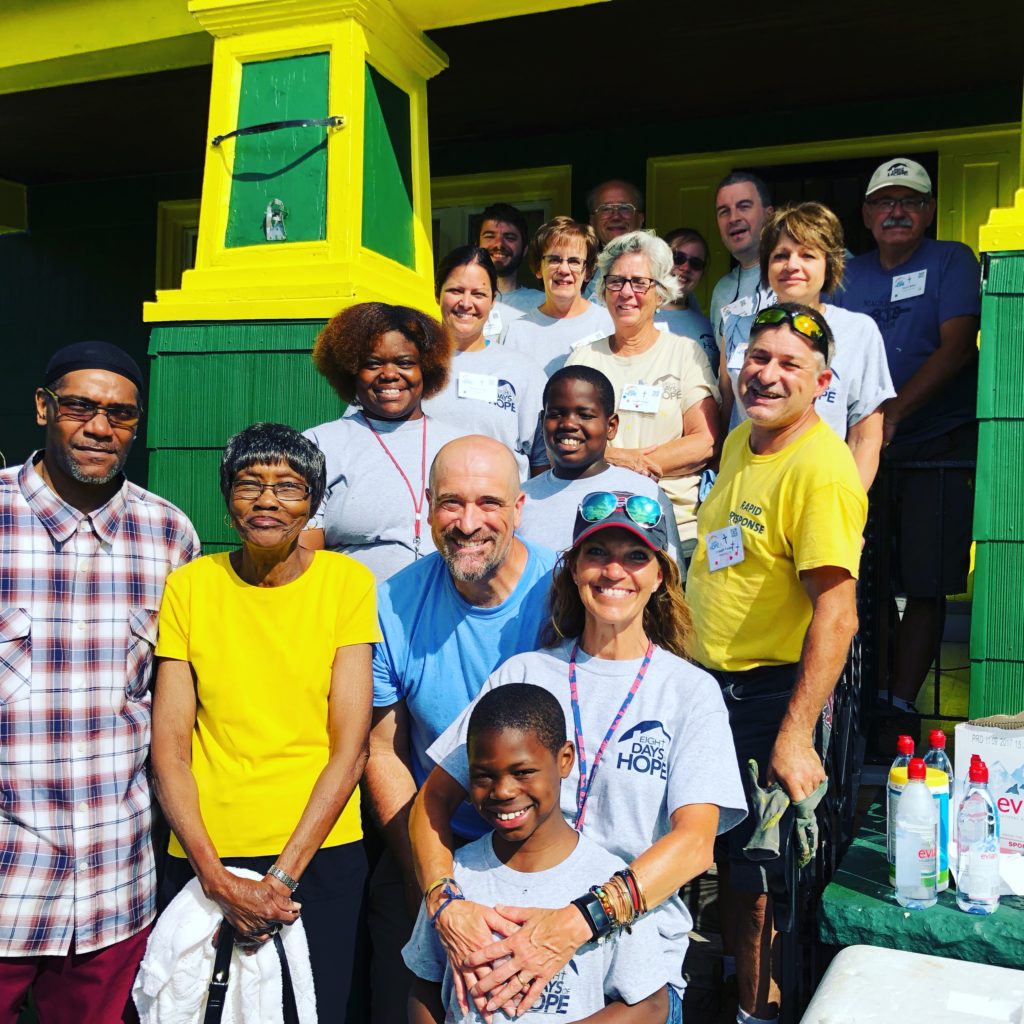
I recently took a group of people to Buffalo New York to love and serve a poor neighborhood with an organization called Eight Days of Hope. Hundreds of people came together and served people in need. We fixed up homes, but we also listened to the homeowners and prayed with them. We built a connection and a relationship. Trips like that will change your life.

  • You change the world one person at a time.

We all are among the richest people in the world.  Most people in this world don’t have anything. We don’t realize this until we go and see how other people live in other countries or other neighborhoods.  Showing compassion can start right here in our own backyards. When you start looking for people that need help and people that need encouragement, your eyes are opened to a whole new world.  Every day we come into contact with people that need our compassion. When was the last time you did an intentional act of kindness for someone? Who is your one person?

  • It does something to the heart of God – It blesses God.

Think about your own children, if they hurt you hurt.  Think about how much God loves His children and how much He must hurt when his children are struggling and hurting.  Jesus said, “Whatever you did for the least of these you did for me.” Have you turned any heads lately with your light?  

Most people start out with good intentions, but then get busy and preoccupied and forget about all the other people out there.  We forget that the local church is in the people saving and serving business. I believe that the local church is the hope of the world, and that together the church can make a huge impact in our communities and around the world. Let your light shine!

5 Principles For Dealing With Change

Things around us are always changing.  Think about your job and the number of changes that have happened in the last 3 months.  How about the stores that you like to shop at or the restaurants that you enjoy eating at.  Even the roads that we drive on are changing.  I’ve hit a few huge potholes lately!  In all these areas, things are either changing for the better or the worse.  Things are either deteriorating or being improved.

One area that is in constant change is the people around us and relationships we have.  People are constantly changing, lets face it we are emotional beings and so there are lots of ups and downs for all of us.  People are complicated and difficult, and yet we need people and relationships in our lives in order to thrive.

So when it comes to all this change around us how do you not get totally stressed out and just give up.

I’d like to give you five simple principles that can help you navigate the changes going on in your life or to help create positive changes in your life.

  1. Control the Controllable – Most of things around us, and all of the people around us are out of our control.  If we do try to control the things or people around us we add additional stress to everyone’s lives.  This principle brings the focus back to us and what we need to do, and what we can control.  We can control what we say; what we do; what we focus on; who we listen to; what we study; what we learn; what boundaries we set; what we spend and where we spend it.  We control what and when we eat, how much sleep we get and the amount of exercise we get.  The choices and decisions we make are within our control.  What other people say or do is out of our control, but we are in control of how we respond.
  2. Monitor the Conversations in Your Head – We talk to ourselves more than anyone else.  Those conversations are what I like to call narratives or stories that get replayed over and over again.  Our internal conversations come from past experiences, things we have learned or picked up along the the way.  For many people those conversations or stories are not as positive as they should be.  Those conversations with ourselves lead to decisions, choices, words spoken and outward behavior whether good or bad.  So start being more aware of what you are telling yourself.  Start to question if it’s really true, maybe you are believing a lie or deceiving yourself.  Maybe you need to start a new story.
  3. Ask Questions & Ask for Help – If you don’t understand something or someone it’s always a good practice to ask questions with the intent of wanting to understand.  What goes right along with this is to listen well.  When you ask good questions and then listen intently you can avoid a lot of misunderstandings and mistakes.  A great practice is to repeat back to the person what you heard them say.  Ask clarifying questions if you need to.  Fear keeps us from asking questions or asking for help.  When you are struggling in any area of life it is wise to ask for help.  There are other people that have gone through what you are going through or have helped others with similar things.  So ask honest, sincere questions to help you fully understand what the other person is saying or asking you to do.  Also ask for help if you don’t know how to do something or you are stuck in an area of your life.
  4. Keep Growing – The books you read and the people you meet will determine the kind of life you will have.  The people that are constantly growing, learning and interacting with other people have the most influence in this world.  Put a plan together of what books you want to read and the people you want to meet or reconnect with.  Make sure you are growing intellectually, relationally, emotionally, and spiritually.
  5. Make Your Faith a Priority – The one thing that I believes helps us the most when it comes to handling change is faith.  The Christian faith has been what has guided me for most of my life.  Learning from Jesus Christ has been the biggest help in making good decisions, handling stress and change, and dealing with all the relationships in my life.  Make growing in your faith a high priority and many of these other things will fall into place.

Doing these five things will bring your stress level down, improve your work and relationships and bring more contentment and joy to your life.  Life will never be perfect, but it can be better.